

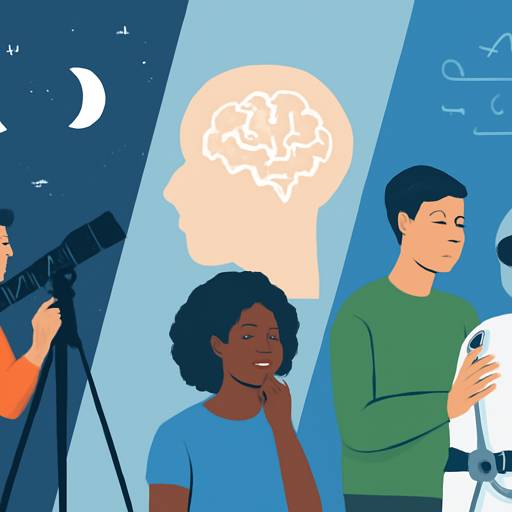
Breakthrough learning happens when curiosity meets a concrete challenge. Whether capturing the faint dip of an exoplanet transit, modeling how the brain juggles attention, or programming a team of tiny robots to navigate a maze, students can build portfolio-ready work that blends scientific rigor with engineering creativity. The ideas below spotlight high-impact directions across astronomy research ideas, cognitive science, and both humanoid and swarm robotics. Each pathway emphasizes real data, reproducible methods, and measurable outcomes—the hallmarks of authentic STEM research. With clear goals, simple but reliable tools, and solid analysis practices, learners can transform abstract concepts into publishable posters, competition-ready demos, or even contributions to open datasets.
Astronomy Research Ideas and Space Telescope Pathways for Student Explorers
Astrophysics is uniquely welcoming to students because the universe is an open laboratory—and much of its data is public. A compelling starting point is monitoring variable stars or exoplanet transits using school or community telescopes. Students can plan an observing session with planetarium software, collect time-series images, and derive light curves to detect brightness changes. With tools like AstroImageJ or the Python packages lightkurve and astropy, they can perform photometry and fit transit models, presenting uncertainties and comparing their results with catalog values. These astronomy research ideas train learners to think like scientists: form a hypothesis, acquire and calibrate data, analyze trends, and report results with appropriate error bars.
Students without local telescope access still have rich options. NASA’s Mikulski Archive for Space Telescopes (MAST) and ESA’s ESASky host enormous datasets from missions including Hubble, TESS, and JWST. Learners can extract and analyze archival data—classifying variable stars, confirming transit signals, or searching for supernova candidates in open imaging sets. For curated student-ready Space Telescope Projects and data challenges, it’s easy to structure a semester plan that moves from basic image handling to advanced statistical modeling. A practical workflow might include target selection, data retrieval via astroquery, detrending and systematics removal, and model fitting with Markov Chain Monte Carlo for robust parameter estimation.
Spectroscopy offers another approachable frontier. With a low-cost slit spectroscope and a DSLR or CMOS camera, students can record stellar spectra, identify hydrogen Balmer lines, and estimate stellar temperatures via Wien’s Law. Meteor science is surprisingly accessible, too: radio scatter detection can log meteor events during daytime using simple antennas and software-defined radio. For those drawn to solar-system dynamics, astrometry projects contribute to real tracking of near-Earth objects. Submitting time-stamped images to software like Astrometrica lets learners determine precise positions for follow-up work reported to international databases. By blending observation, data science, and open collaboration (e.g., AAVSO campaigns or Zooniverse classifications), students build a bridge from the backyard to the professional astronomy community.
Cognitive Science for High School: Experiments that Decode the Mind
Behavioral and cognitive science shines when questions are specific, variables are controlled, and results are replicable. In cognitive science for high school, students can design elegant experiments on perception, attention, memory, language, and decision-making. Classic paradigms include the Stroop effect (interference between word meaning and color naming), change blindness (missed visual changes between alternating scenes), mental rotation (time-cost for spatial transformations), and n-back tasks (working memory load). Using platforms like PsychoPy, OpenSesame, or browser-based tools (PsychoJS, jsPsych), learners can build trials with millisecond timing, log reaction times and accuracy, and export clean CSV files for analysis.
Strong methodology matters. Before testing, students should preregister hypotheses, define sample sizes based on expected effect sizes, and specify exclusion criteria (for example, removing trials with extreme response times that indicate inattention). Ethics is non-negotiable: secure informed consent, anonymize datasets, and avoid sensitive questions unless approved by a supervising body. For statistics, t-tests and ANOVAs cover many designs, but learners should also compute effect sizes (Cohen’s d, partial eta-squared) and confidence intervals to interpret practical significance. Visualization—violin plots, confidence bands, and Q-Q plots—helps verify assumptions and communicate findings. Tools like JASP, jamovi, or Python (pandas, pingouin, seaborn) streamline the entire pipeline, from summary statistics to publication-ready figures.
Compelling projects connect brain and behavior to the real world. Students might contrast distraction costs from smartphone notifications across age groups, probe how sleep debt shifts reaction time variability, or test whether spaced repetition outperforms cramming for vocabulary acquisition. Cross-disciplinary teams can design human-robot interaction (HRI) studies—e.g., measure trust and compliance when a robot provides guidance with different voice tones or facial displays. Learners can also explore computational models, fitting drift-diffusion models to decision data or Bayesian cue integration models to multisensory judgments. By combining rigorous design, open-source tooling, and transparent reporting, students generate credible insights into cognition while building analytical fluency valued across STEM domains.
Humanoid and Swarm Robotics: From Single Bots to Collective Intelligence
Robotics sits at the nexus of software, mechanics, and behavior. For humanoid robotics for students, the goal is to tame complexity with modular design and simulation-first thinking. Low-cost platforms (Robotis Mini, Arduino- or Raspberry Pi–based builds with servo kits) let learners prototype locomotion, gesture control, and vision-guided interaction. Start with kinematics: map joint angles to foot placement and ensure center-of-mass stability over the support polygon. Add gaits through finite-state machines or central pattern generators; verify on a simulator such as Webots, Gazebo, or PyBullet before transferring to hardware. Vision-based behaviors—face tracking using OpenCV or MediaPipe, object grasping with AprilTags—can follow, moving toward natural communication via speech-to-text and text-to-speech. ROS 2 provides a professional scaffolding for modular nodes, message passing, and sensor fusion, while onboard accelerometers and force sensors enable fall detection and compliant control.
Meanwhile, Swarm robotics student projects highlight the power of simple rules executed in parallel. In flocking, for instance, each robot follows three local rules—separation, alignment, cohesion—producing emergent group motion. Formation control maintains geometric patterns; foraging algorithms split a team into scouts and carriers to locate and retrieve objects; coverage tasks tile an area while minimizing overlap. Budget-friendly platforms—micro:bit rovers, small differential-drive kits, or nano-quadrotors like Crazyflie—can communicate via Bluetooth Low Energy or infrared. Students can implement distributed consensus (e.g., majority voting on target locations), obstacle avoidance with ultrasonic sensors, and resilience strategies like leader election after node failures. Performance metrics should be explicit: time to coverage, energy consumed per robot, communication overhead, and success rate under noise or dropped messages.
Case studies ensure theory becomes evidence. One class deployed ten palm-sized rovers to explore an unknown maze: each robot maintained a local occupancy grid using simple lidar or time-of-flight sensors and shared frontier cells over a mesh network. A decentralized policy prioritized least-explored corridors; the teacher evaluated team efficiency by path redundancy and time-to-completion across trials with changing obstacles. Another student team built a 3D-printed, 12-DOF mini-humanoid that learned sign-language gestures. Using a webcam and a lightweight pose-estimation model, the robot mirrored a human demonstrator, then executed stored sequences with trajectory smoothing and torque limits for safety. The group documented improvements with a confusion matrix of recognized signs, joint tracking error in degrees, and success rates across lighting conditions. Across both humanoid and swarm domains, disciplined logging, simulation-to-reality validation, and incremental testing produce robust, competition-ready systems that demonstrate how local rules and feedback can scale into sophisticated, intelligent behavior.

